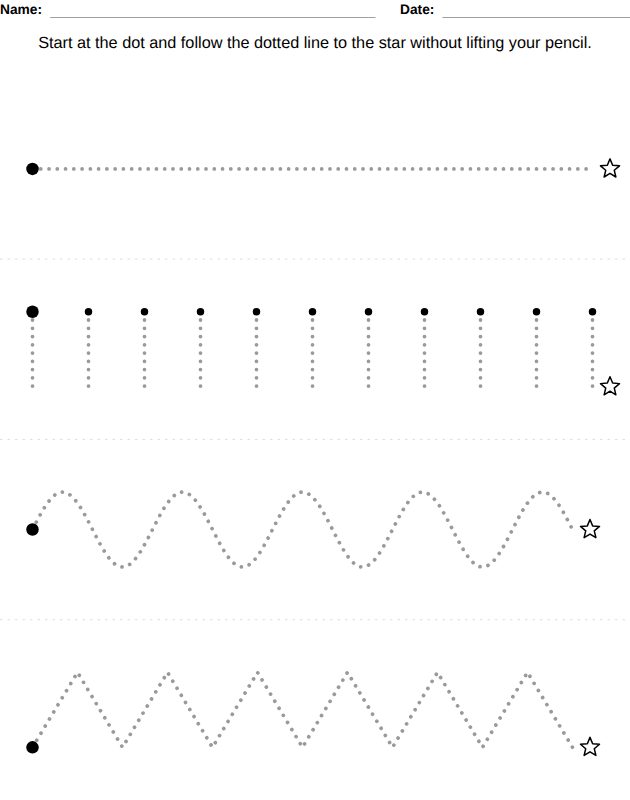
1. Pencil control
Ages 3 to 6
Dotted lines to follow from the dot to the star without lifting the pencil: straight lines, waves, bridges, zigzags, loops and other shapes. 4 big lines per page at ages 3-4, 5 at ages 4-5 and 6 at ages 5-6.
Kids workbooks / Handwriting
The LogikLand handwriting workbook follows a child from the first pencil lines at age 3 to joined-up cursive words and short sentences at age 11. It has 15 kinds of worksheets: pencil control, cutting, tracing numbers and letters, the child’s own first name, alphabet games, spelling with pictures and cursive writing. Choose the levels by age or by school grade.
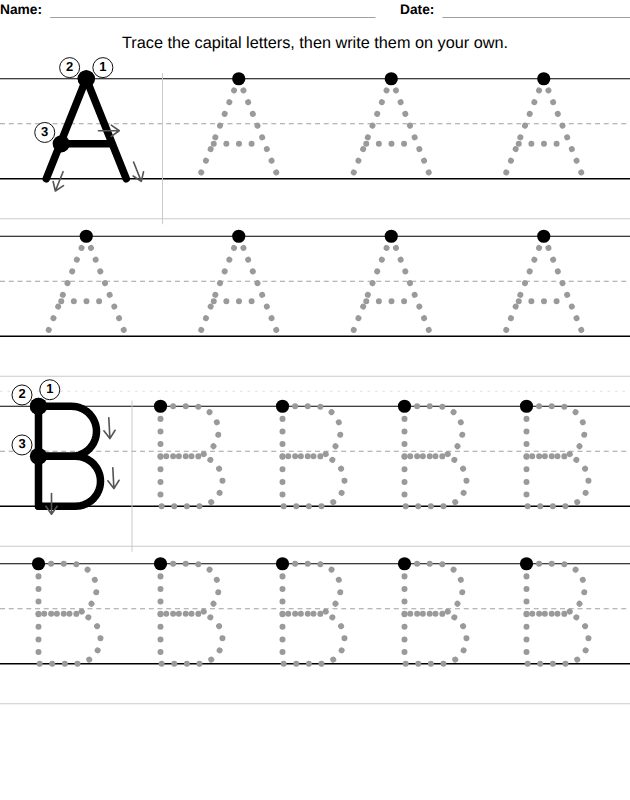
On the tracing pages, the first letter of each line is the model, with the starting dot, the number of each stroke and an arrow showing the direction. The next letters are dotted to trace, and from ages 5-6 the last boxes of the line are empty, to write alone. The pictures below are real pages made by the generator.
Ages 3 to 6
Dotted lines to follow from the dot to the star without lifting the pencil: straight lines, waves, bridges, zigzags, loops and other shapes. 4 big lines per page at ages 3-4, 5 at ages 4-5 and 6 at ages 5-6.
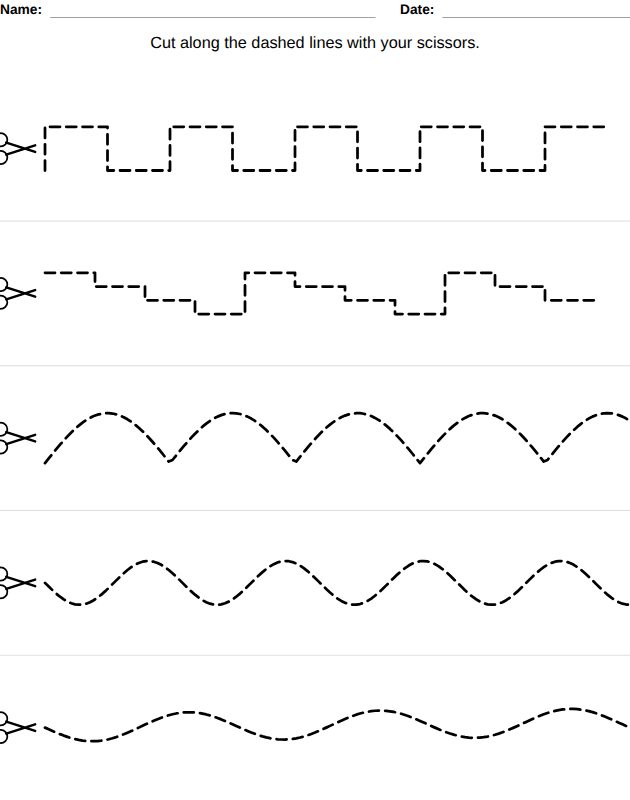
Ages 3 to 6
Dashed lines to cut with scissors: straight, wavy and zigzag lines. At ages 5-6, every other page has shapes to cut out instead. Pages to cut always have an empty back in the book, so nothing is lost on the other side.
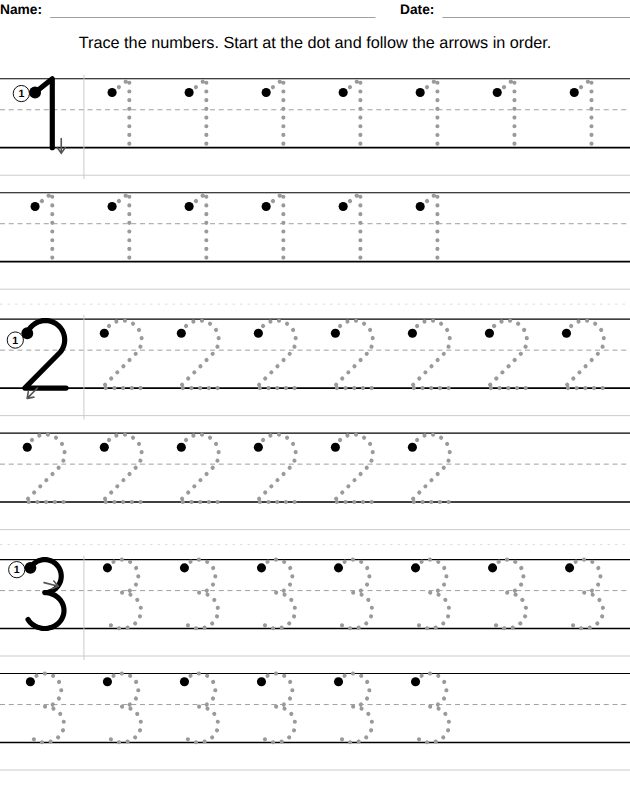
Ages 3 to 7
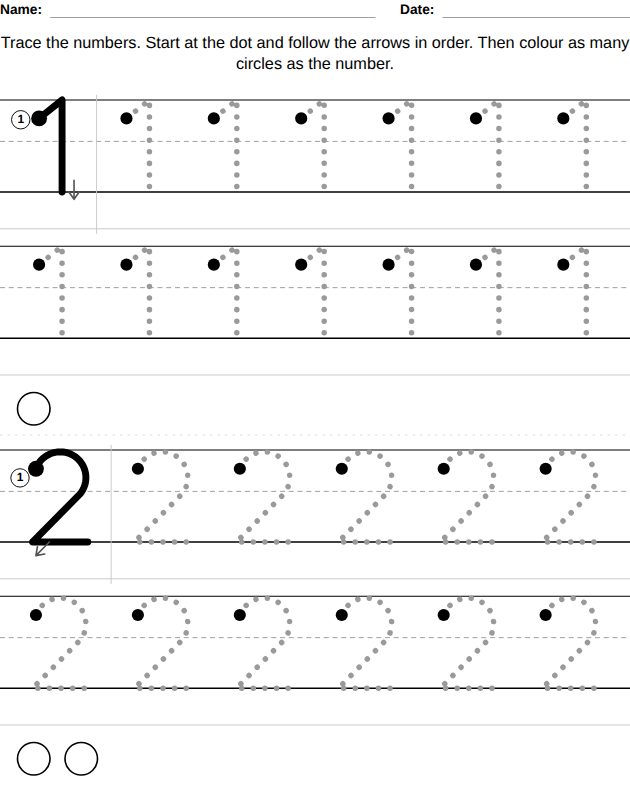
The numbers 0 to 9 on writing lines, 2 or 3 numbers per page. At ages 3-5, each line also has circles to colour, as many as the number, to link the written number to a quantity.
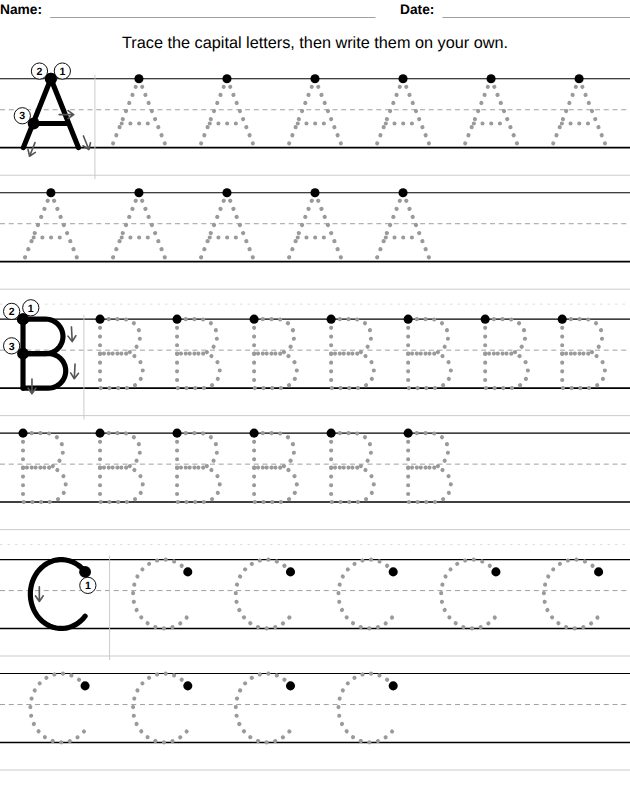
Ages 4 to 7
The alphabet in capital letters, 2 letters per page at ages 4-5 and 3 from ages 5-6, with the stroke order on the model letter. The letters follow each other from page to page and the alphabet starts again when it is finished.
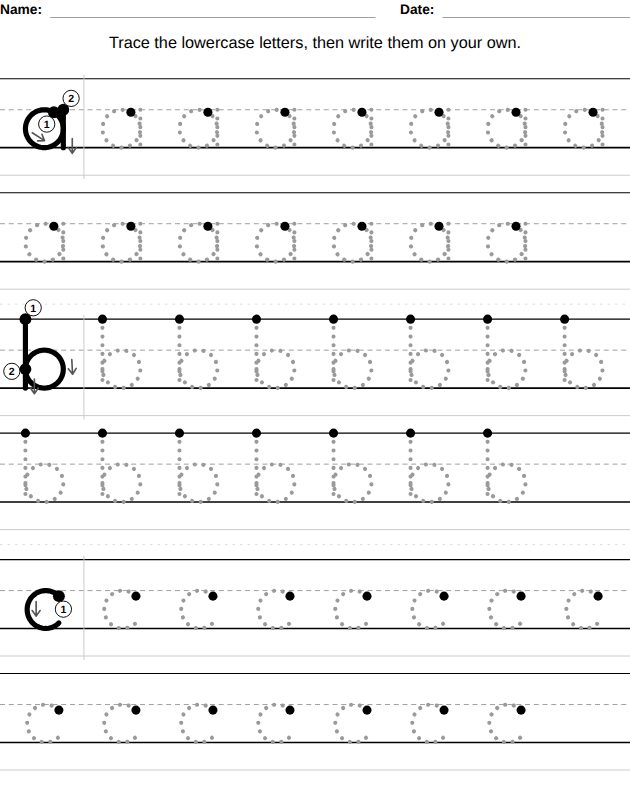
Ages 5 to 7
The same tracing page for lowercase letters, on 4 writing lines so that the child sees which letters go up and which go down.
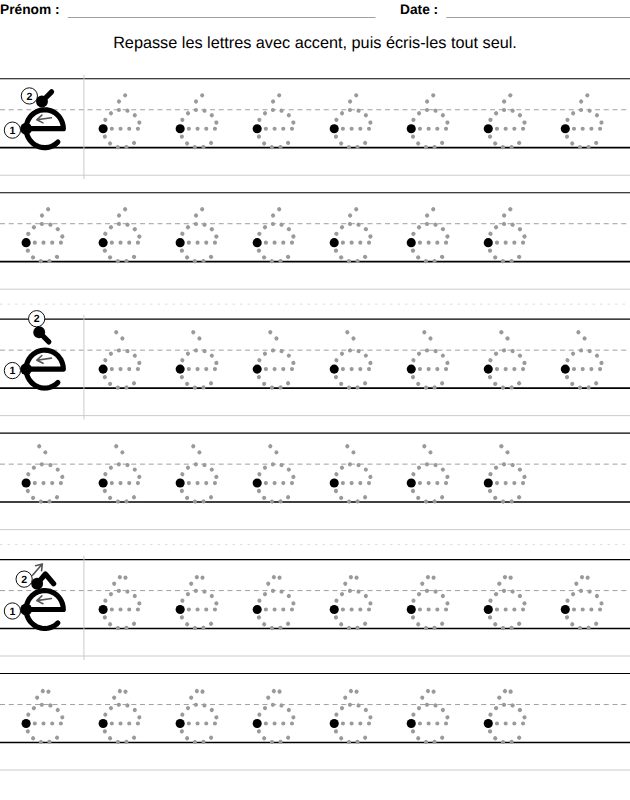
Ages 5 to 7
In the French, Spanish, German and Italian books only: the special letters of the language, such as é, è and ê in French, ñ in Spanish or ß in German, traced like the other letters.
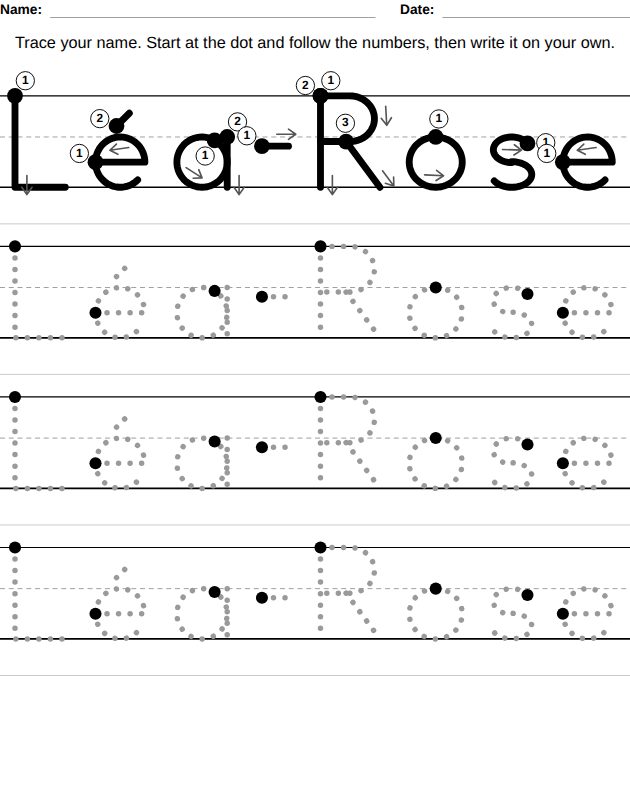
Ages 3 to 7
You type the child’s first name in the book settings (up to 20 characters, hyphen and apostrophe allowed). The page shows the name with the starting dots and stroke numbers, then dotted copies to trace and, from ages 5-6, an empty line to write it alone.
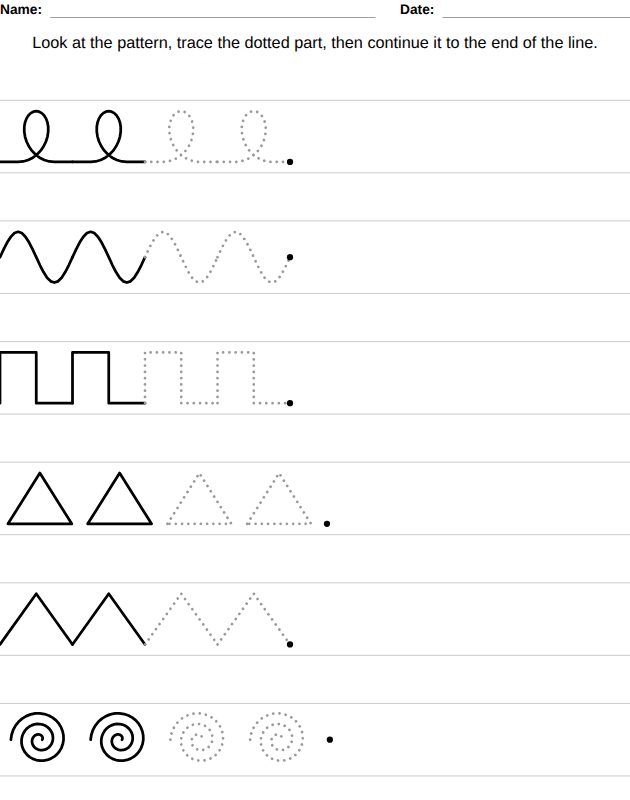
Ages 4 to 7
Each line starts with two drawn motifs and two dotted ones, then the child continues the pattern to the end of the line: loops, waves, crenels, triangles, spirals.
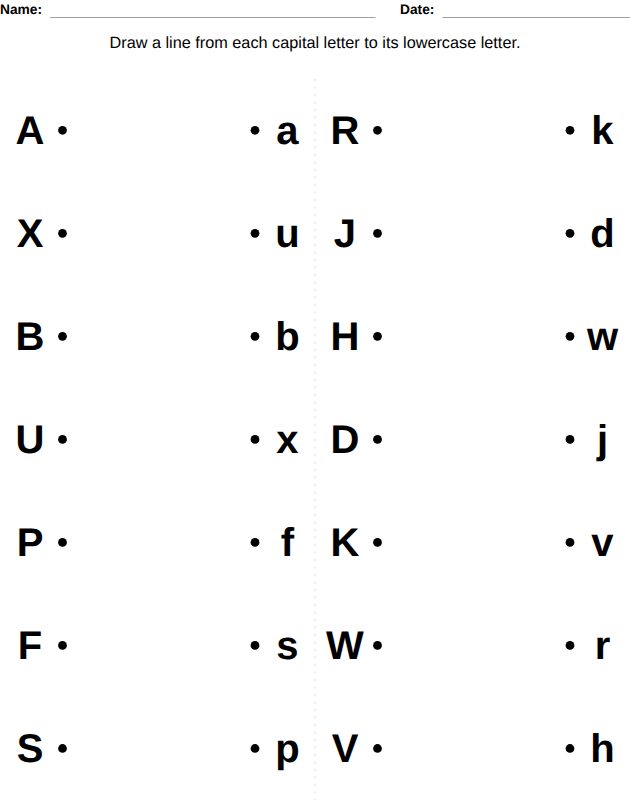
Ages 4 to 7
Draw a line from each capital letter to its lowercase letter.
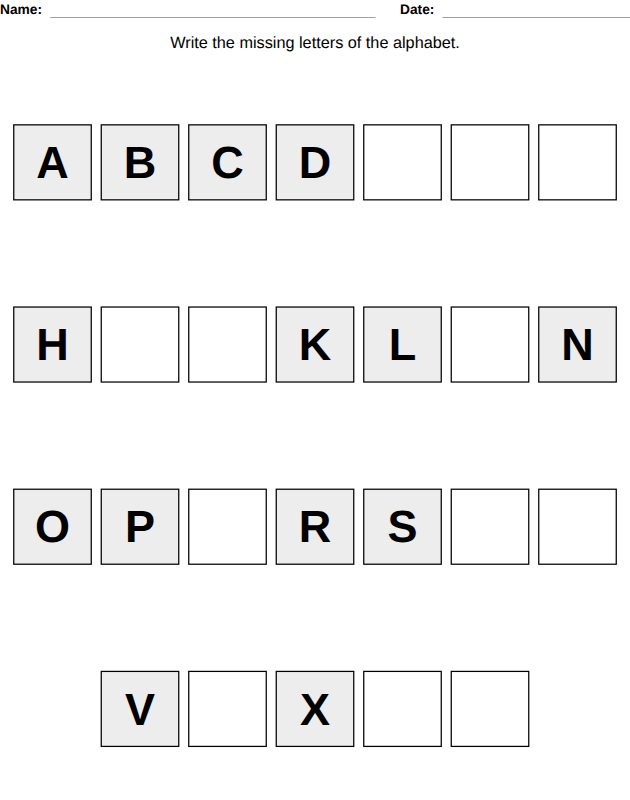
Ages 4 to 9
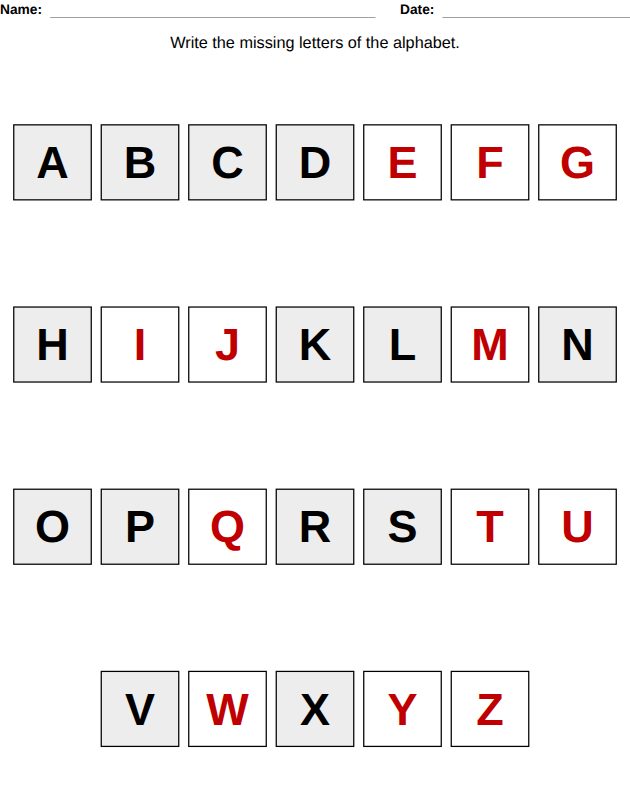
The whole alphabet on 4 lines with 2 or 3 letters missing per line at ages 4-6, then 7 pieces of the alphabet with 4 missing letters each, in lowercase from ages 6-7. At ages 7-9, the child writes the letter before and the letter after 12 letters.
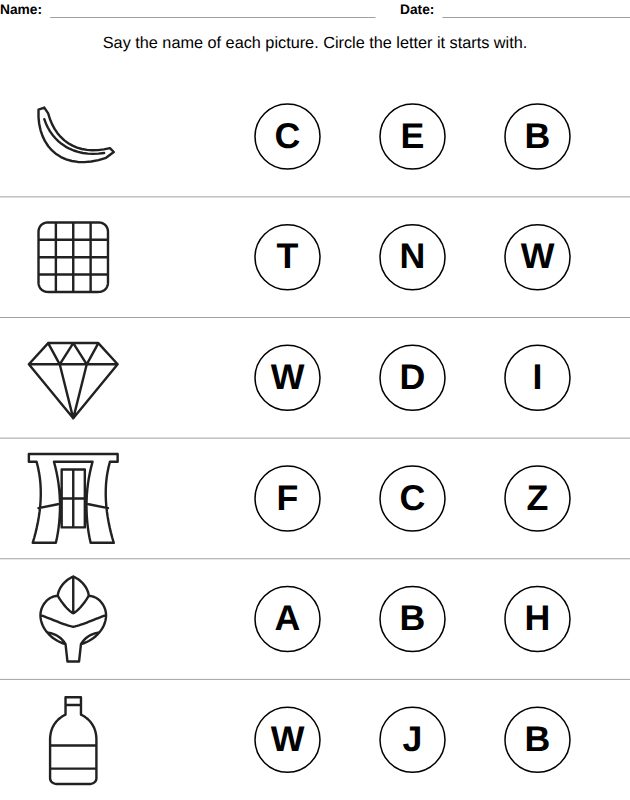
Ages 3 to 7
Say the name of each picture and circle the letter it starts with, among three letters. The letters are capitals at first, then lowercase from ages 6-7. The pictures are LogikLand drawings and the words are in the language of the book.
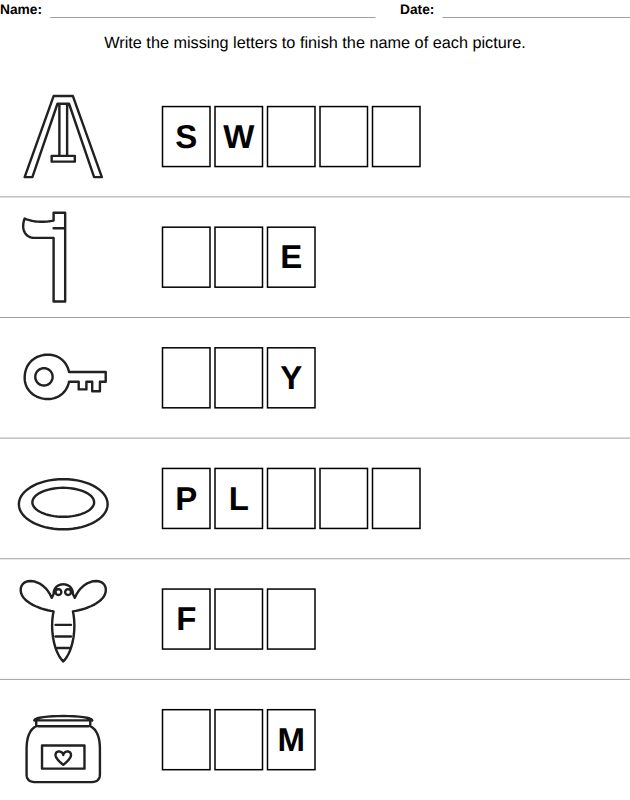
Ages 5 to 9
A picture and a row of boxes, one per letter: the child writes the name of the picture. Only one letter is missing at ages 5-6, half of the letters at 6-7, only the first letter is given at 7-8, and no letter at all at 8-9.
Ages 6 to 10
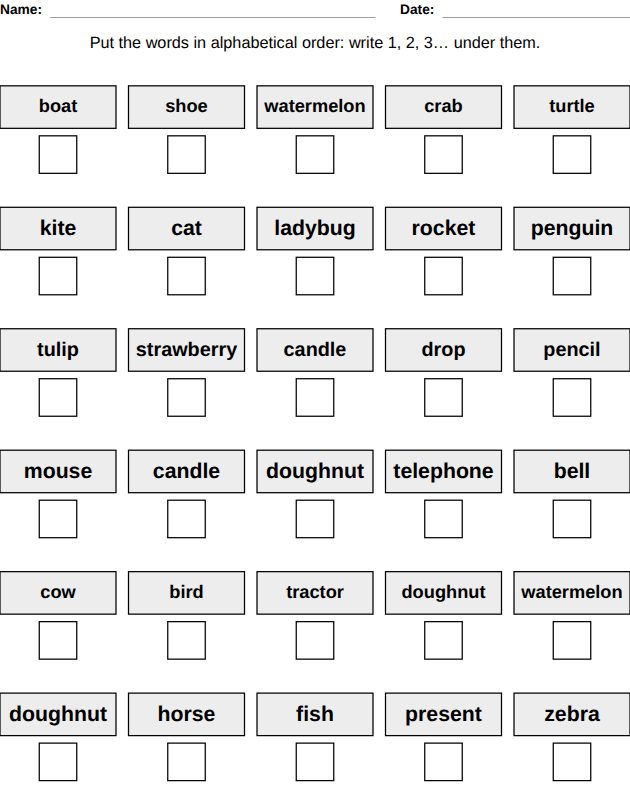
Children write 1, 2, 3, 4 under the letters or words to put them in alphabetical order. Groups of 4 letters at ages 6-7, then groups of 4 or 5 words that start with different letters, and at ages 9-10 groups where at least two words start with the same letter, so the second letter decides.
Ages 6 to 10
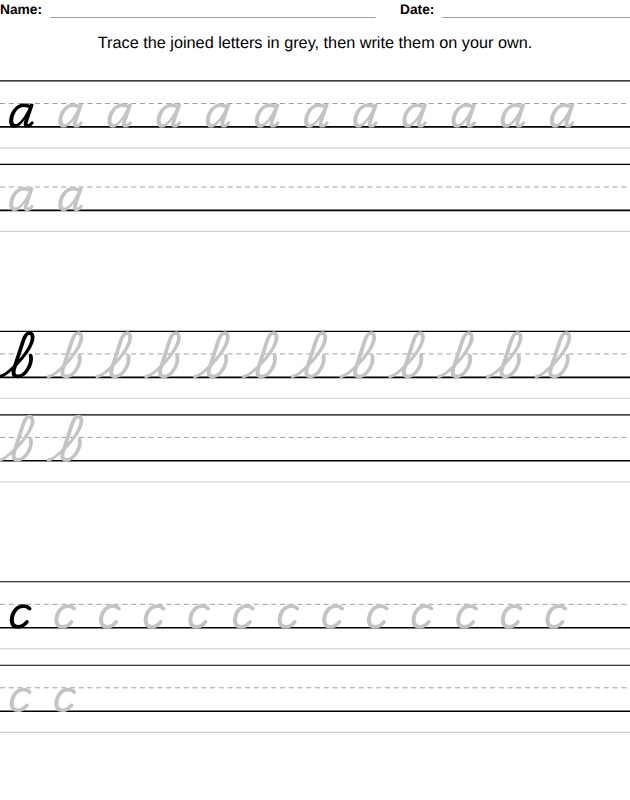
One joined letter per group: a black model, grey letters to trace, then room to write alone. The letters are drawn with the school cursive font of the country of the book (see below).
Ages 6 to 11
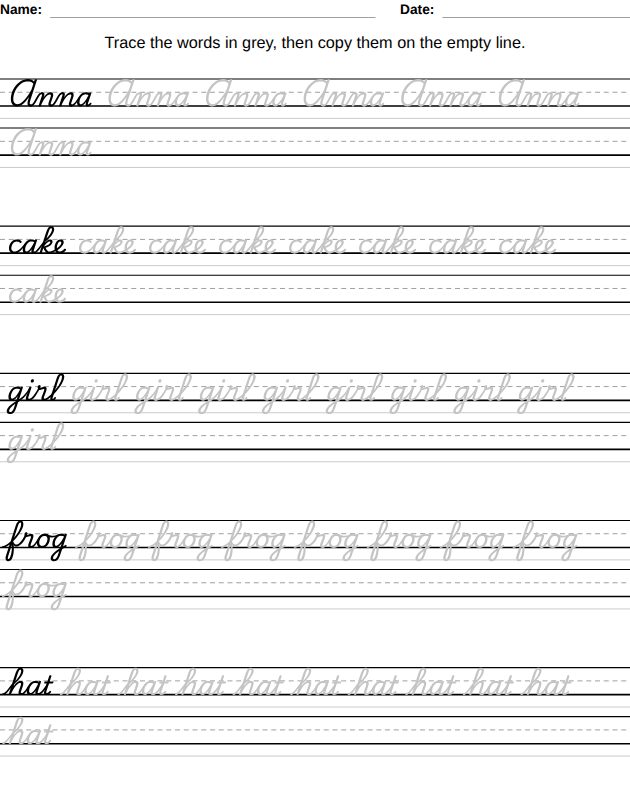
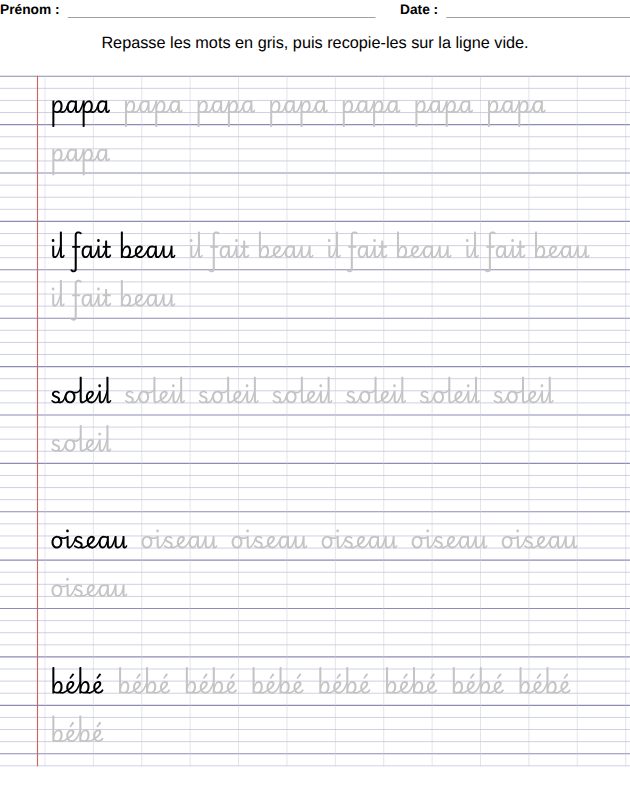
Words in joined-up writing to trace in grey, then to copy on the empty line. Short words of up to 5 letters at ages 6-7, then longer words, and short sentences at ages 9-11.
The tracing pages change with the level. At ages 3-5 every box is dotted, the letters are big and the numbers come with circles to colour. From ages 5-6 the letters are smaller and the last boxes of each line are empty, to write alone.
Pencil control and cutting stop at ages 5-6, when the letters take over, and cursive starts at ages 6-7. A book with several levels has one section per level, in order.
Cursive is taught differently in each country, so the workbook uses a different school font for each language (Playwrite fonts, open font licence): American cursive on 4 lines in English, the French school cursive on Seyès lines (the ruled paper of French exercise books), German Schulausgangsschrift, and the Spanish and Italian school cursive.
The letters are joined as they are at school, and the words come from the word list of the language of the book.
The alphabet and word worksheets (missing letters, capital and lowercase letters, first letter, write the word, alphabetical order) have their answers in the answer key at the end of the book. Tracing and cutting pages have no answers to check, so they are not in the answer key.
Every option is explained in the kids workbooks guide, and all the other workbooks are on the kids workbook generator page.
Ages 3 to 11, in 8 levels from Ages 3-4 to Ages 10-11 (or Preschool to Grade 5 for a book in English). Pencil control and cutting are for ages 3-6, letters and numbers for ages 3-7, cursive for ages 6-11.
Yes. Type the first name in the book settings and the name tracing page uses it. Without a name, the page shows the word “Name” in the language of the book.
Yes. On the number, letter and name tracing pages, the model shows the starting dot, the number of each stroke and an arrow in the direction of the stroke.
The school cursive of the country of the book language: American cursive in English, French school cursive on Seyès lines in French, and the school fonts of Spain, Germany and Italy for the other languages.
With a PRO or EXPERT plan, which include commercial rights, you can publish and sell your books, for example on Amazon KDP. Books made on the FREE plan are for personal use. The page limit per book is 50 on FREE, 100 on PRO and 200 on EXPERT.
Create a free account to try it, or choose a plan for longer books and commercial rights.
Related: All kids workbooks / Kids workbooks guide / Name tracing worksheet maker / Word games workbook / Plans and pricing
Last updated: October 28, 2026