Kids workbooks / Math

Kids Math Workbook Generator: Math Worksheets for Ages 4 to 11

The LogikLand math workbook puts 13 kinds of math worksheets in one book, from counting dots at age 4 to long division and Roman numerals at age 11. Choose the levels by age or by school grade: the numbers, the layout and the difficulty of every worksheet follow the level, and the answer key is added at the end.

  • 13 kinds of worksheets
  • Ages 4 to 11
  • Levels by age or school grade
  • 5 languages
  • Answer key included

13 math worksheets in one workbook

Each worksheet appears only at the levels where it makes sense: multiplication starts at ages 7-8, division at ages 8-9. Every page has its own numbers, and the pictures below are real pages made by the generator.

Addition worksheet for kids, from the LogikLand kids math workbook

1. Addition

Ages 4 to 11

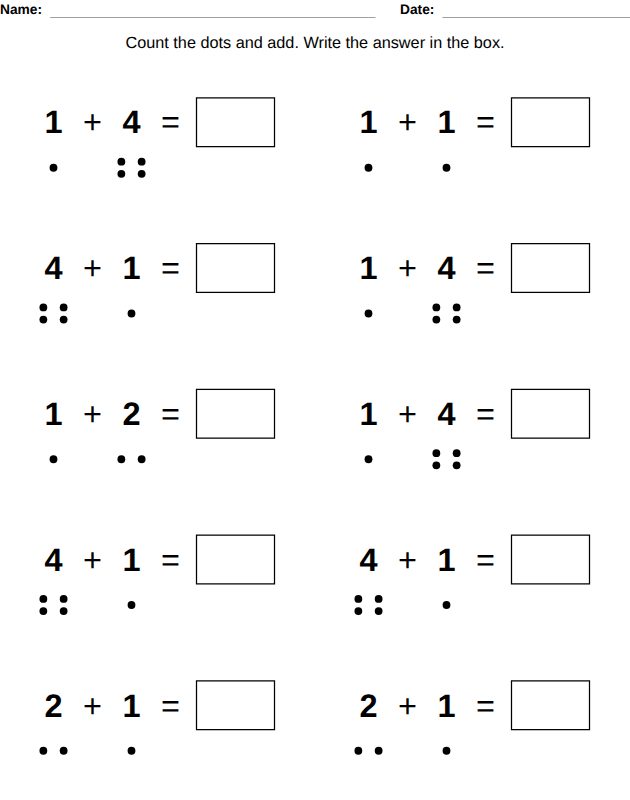
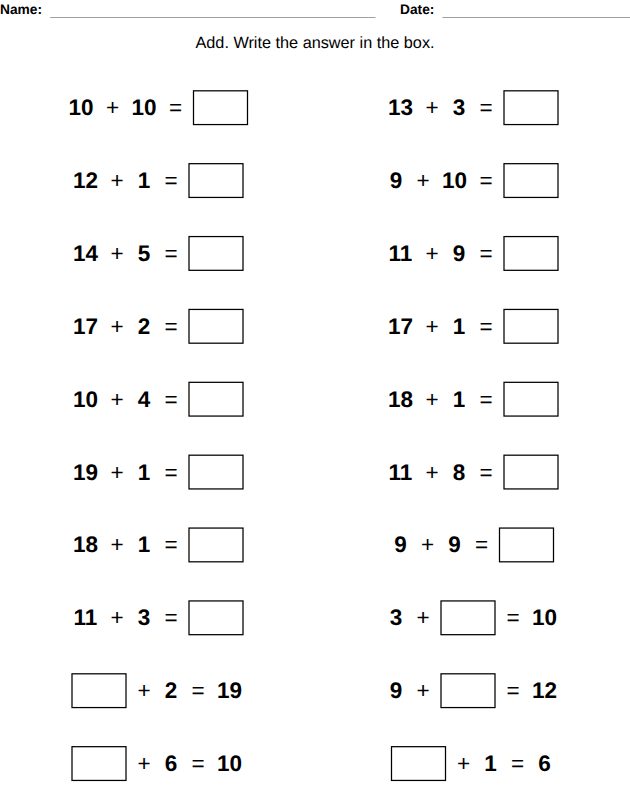
At ages 4-5, children count the dots under each number and add (sums up to 5). At 5-6, sums up to 10; at 6-7, sums up to 20, with a few equations where a missing number must be found.

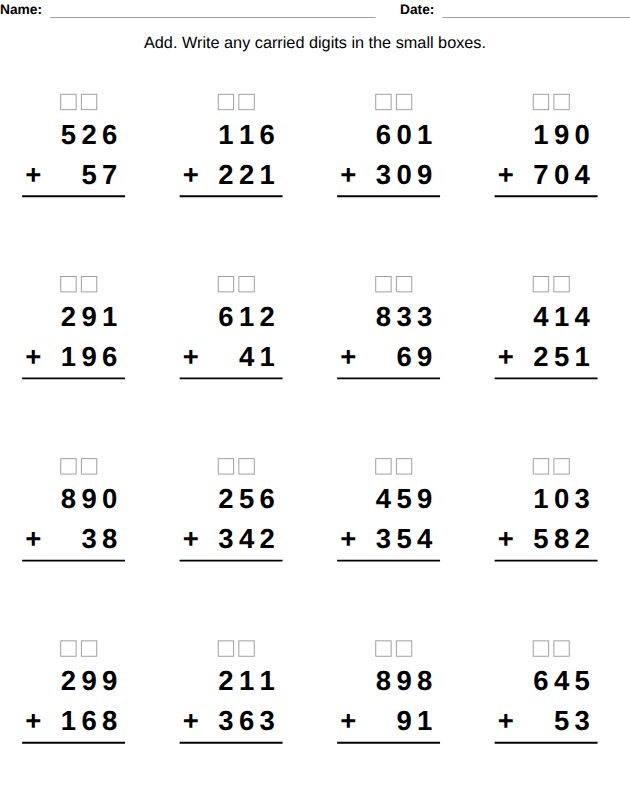
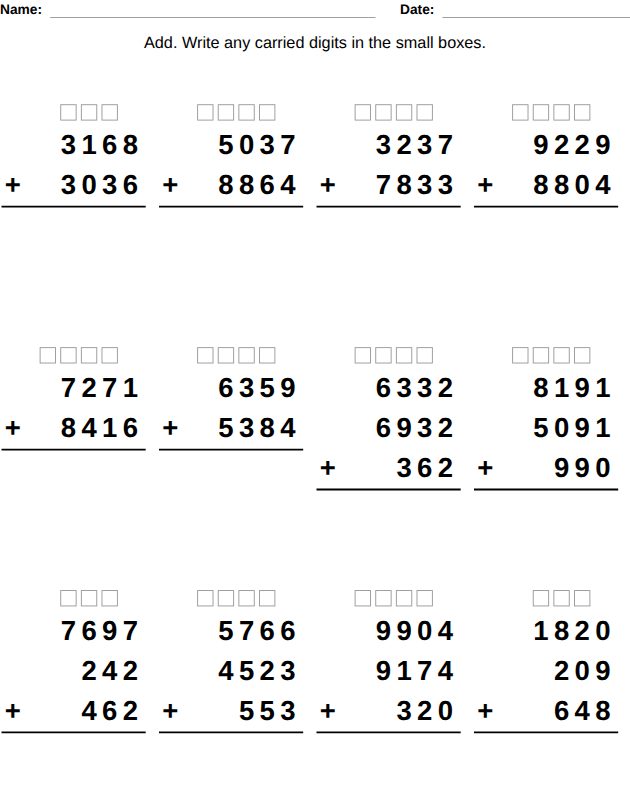
From ages 7-8, the additions are written in columns with small boxes for the carried digits: 2-digit numbers, then 3 and 4 digits, and at ages 10-11 some additions of three numbers.
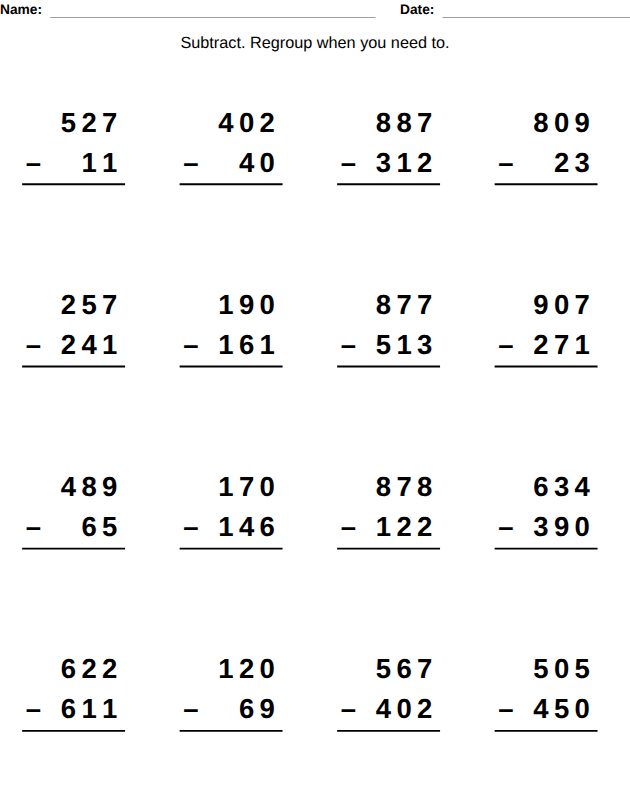
Subtraction worksheet for kids, from the LogikLand kids math workbook

2. Subtraction

Ages 4 to 11

The same path as addition: dots to count, then subtractions up to 10 and 20 with missing numbers, then column subtraction where the child regroups when needed, up to 5-digit numbers at ages 10-11.

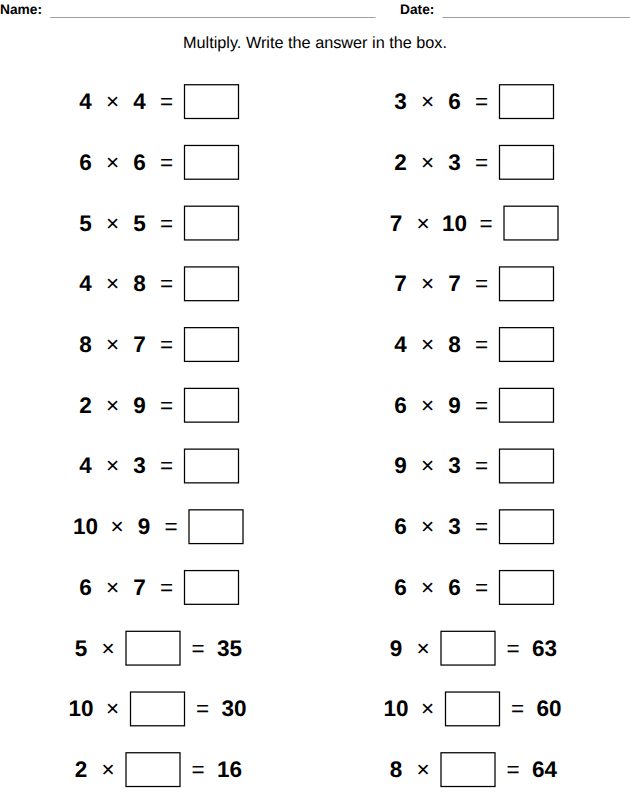
Multiplication worksheet for kids, from the LogikLand kids math workbook

3. Multiplication

Ages 7 to 11

Ages 7-8: the 2, 3, 4, 5 and 10 times tables. Ages 8-9: all the tables from 2 to 10, with a missing factor in the last questions.

Ages 9-10: column multiplication by one digit. Ages 10-11: multiplication by a 2-digit number, with the partial products written out.

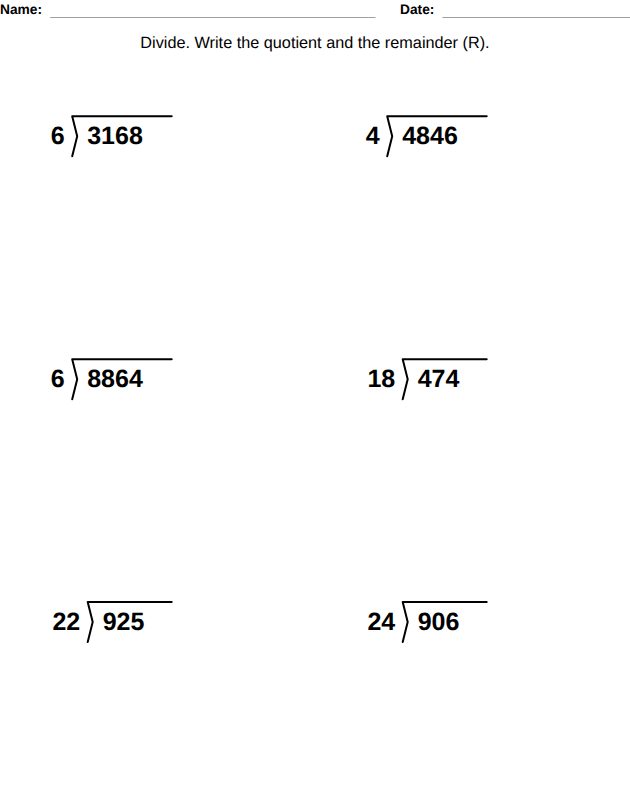
Division worksheet for kids, from the LogikLand kids math workbook

4. Division

Ages 8 to 11

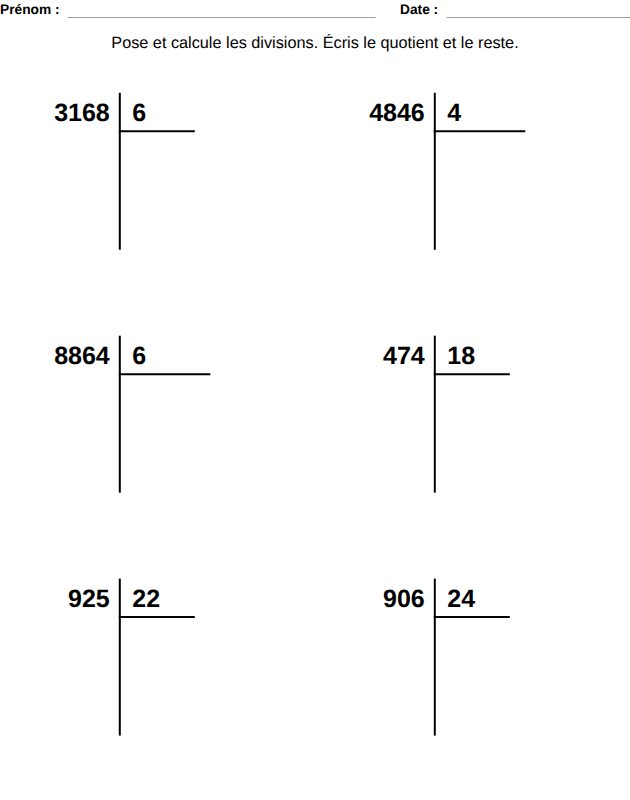
Ages 8-9: division facts from the tables, written in a row. Ages 9-10: long division of a 2 or 3-digit number by one digit, with a quotient and a remainder. Ages 10-11: 4-digit numbers, and division by a 2-digit number.

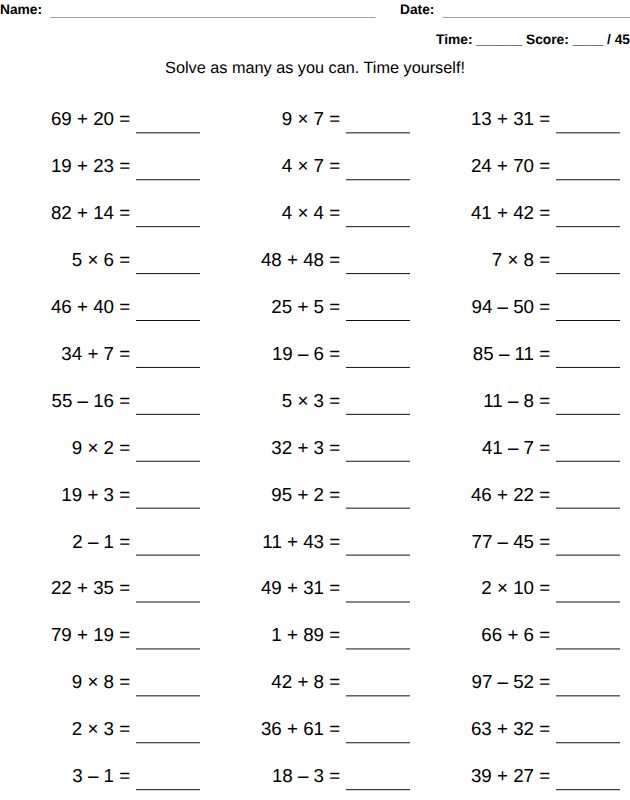
Mental math worksheet for kids, from the LogikLand kids math workbook

5. Mental math

Ages 5 to 11

A page of 45 quick calculations with a Time and Score line, to practise speed. Additions and subtractions up to 20 for the youngest, then multiplication from ages 7-8, all four operations from ages 8-9, and larger round numbers (tens, multiples of five) from ages 9-10.

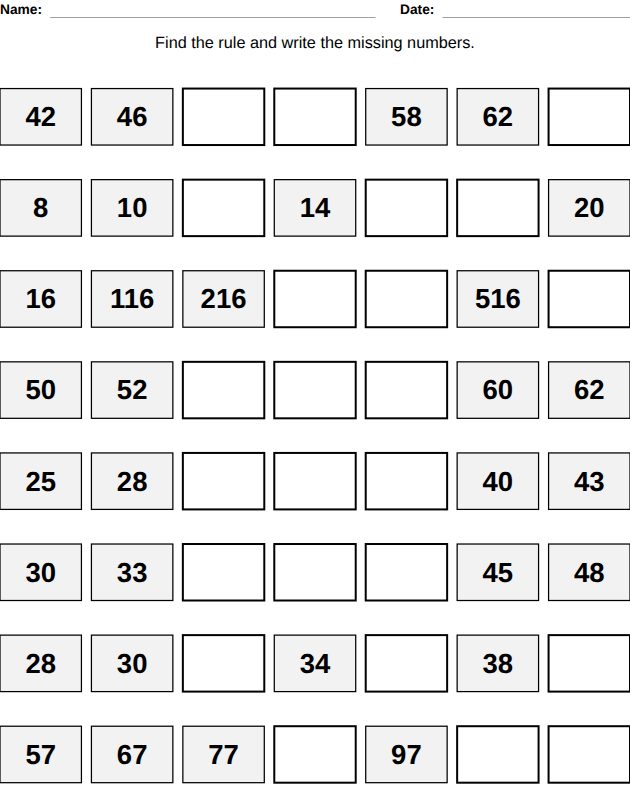
Number patterns worksheet for kids, from the LogikLand kids math workbook

6. Number patterns

Ages 4 to 11

Each row is a sequence with missing numbers: the child finds the rule and completes it. It starts with counting by 1, then by 2, 5 and 10 (with the rule shown on the first rows at ages 6-7), then larger steps, counting backwards, and sequences that double or triple at ages 10-11. The first two numbers of a row are always given.

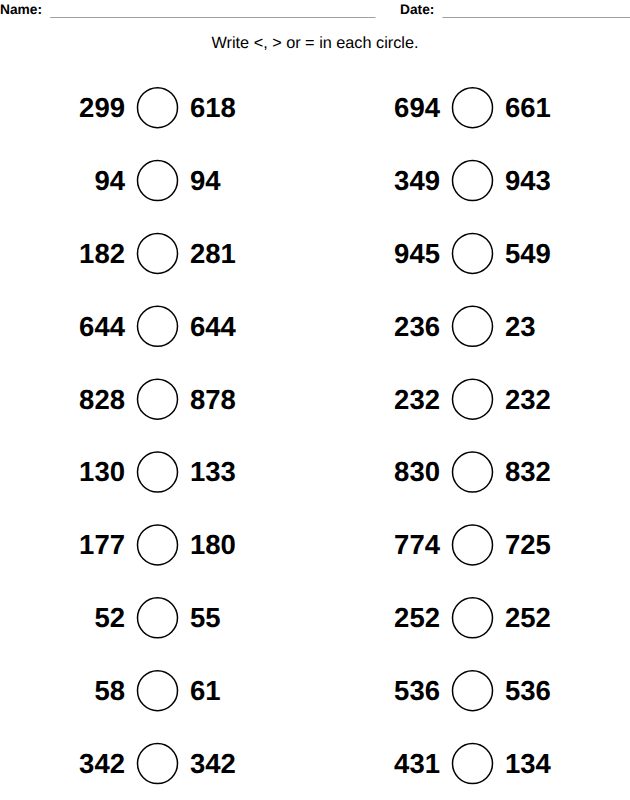
Compare numbers worksheet for kids, from the LogikLand kids math workbook

7. Compare numbers

Ages 4 to 11

Write <, > or = between two numbers: up to 10, 100 and 1000, then 5-digit numbers. Many pairs are close on purpose (the same digits in reverse order, a difference of 1, equal numbers). At ages 9-11, a sum or a product is compared with a number.

Number lines worksheet for kids, from the LogikLand kids math workbook

8. Number lines

Ages 4 to 11

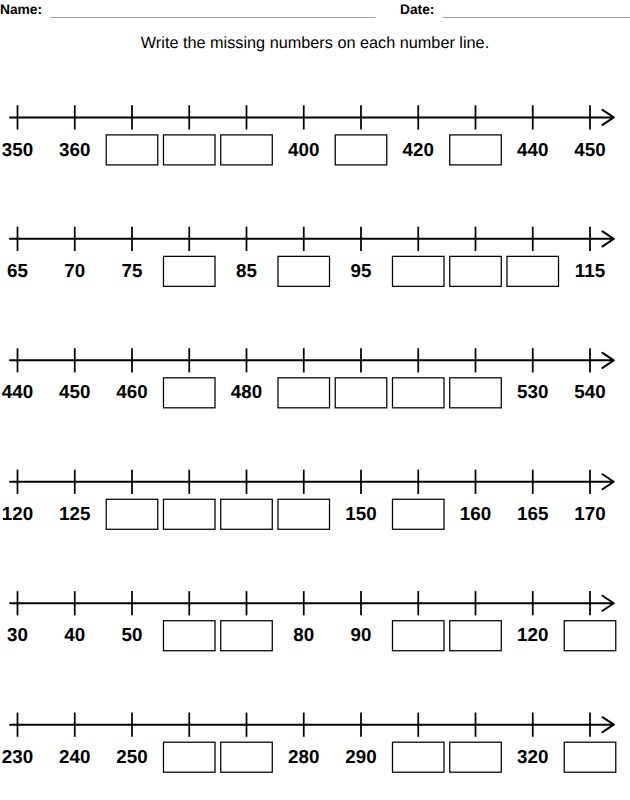
Missing numbers to write under the marks of each number line. The step grows with the level: 1, then 2, 5 and 10, then 100, 250 or 1000, and decimal steps (0.1, 0.2, 0.5) at ages 9-11.

Hundred chart worksheet for kids, from the LogikLand kids math workbook

9. Hundred chart

Ages 5 to 8

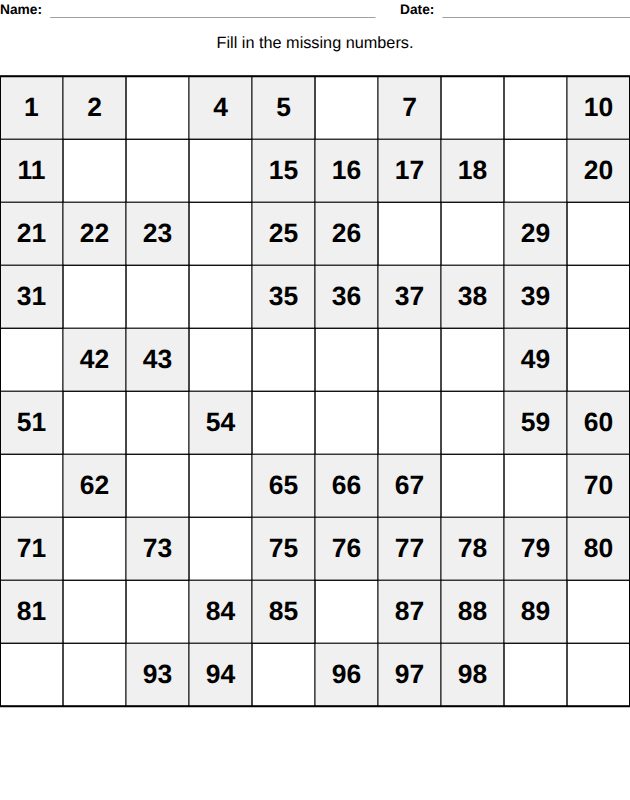
A chart of 100 numbers with empty squares to fill in: 30 missing numbers at ages 5-6, 45 at ages 6-7. At ages 7-8 the chart starts at another hundred (for example 301 to 400) with 60 missing numbers.

Odd and even worksheet for kids, from the LogikLand kids math workbook

10. Odd and even

Ages 5 to 9

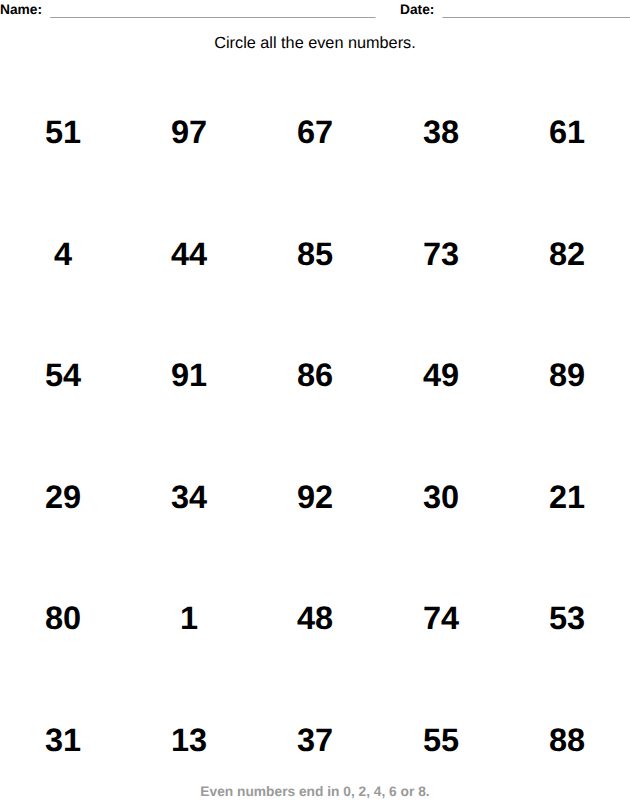
Circle all the even numbers, or all the odd numbers on the next page. The numbers go up to 20, then 100, 1000 and 99,999. For the youngest, a reminder at the bottom says which digits even numbers end with.

Rounding worksheet for kids, from the LogikLand kids math workbook

11. Rounding

Ages 8 to 11

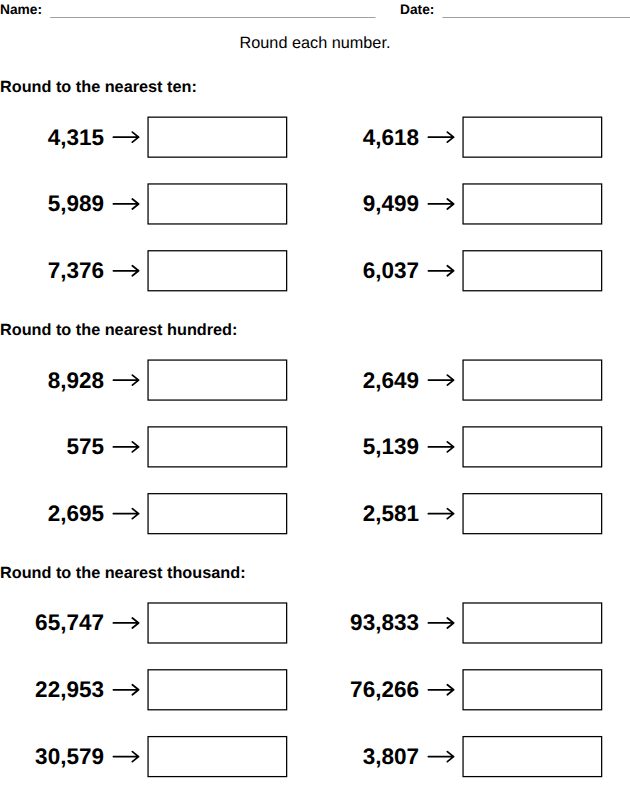
Round to the nearest ten and hundred at ages 8-9, then to the nearest ten, hundred and thousand with larger numbers at ages 9-10. At ages 10-11, decimal numbers are also rounded to the nearest whole number.

Roman numerals worksheet for kids, from the LogikLand kids math workbook

12. Roman numerals

Ages 8 to 11

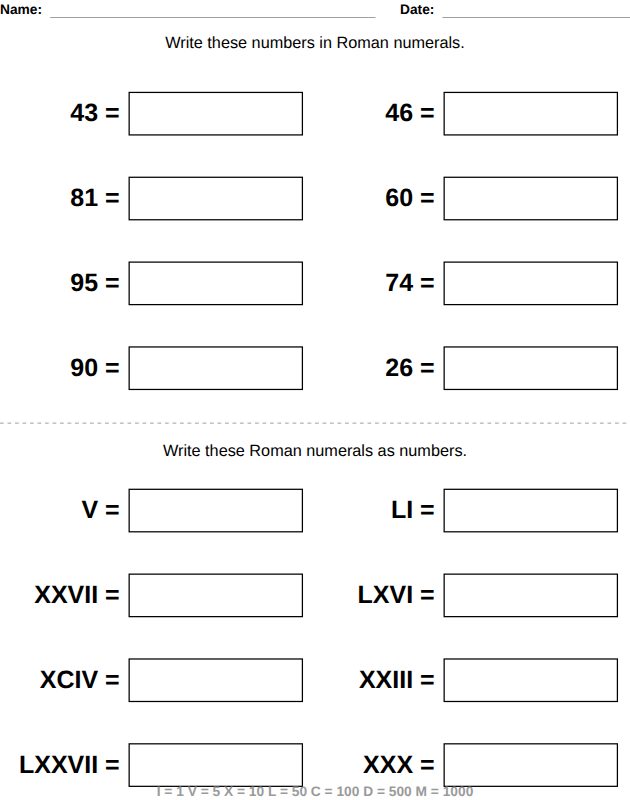
Numbers to write in Roman numerals, then Roman numerals to write as numbers. Up to 20 at ages 8-9, up to 100 at ages 9-10, and up to 2030 at ages 10-11. The value of each Roman symbol is printed at the bottom of the page.

Number pyramids worksheet for kids, from the LogikLand kids math workbook

13. Number pyramids

Ages 6 to 11

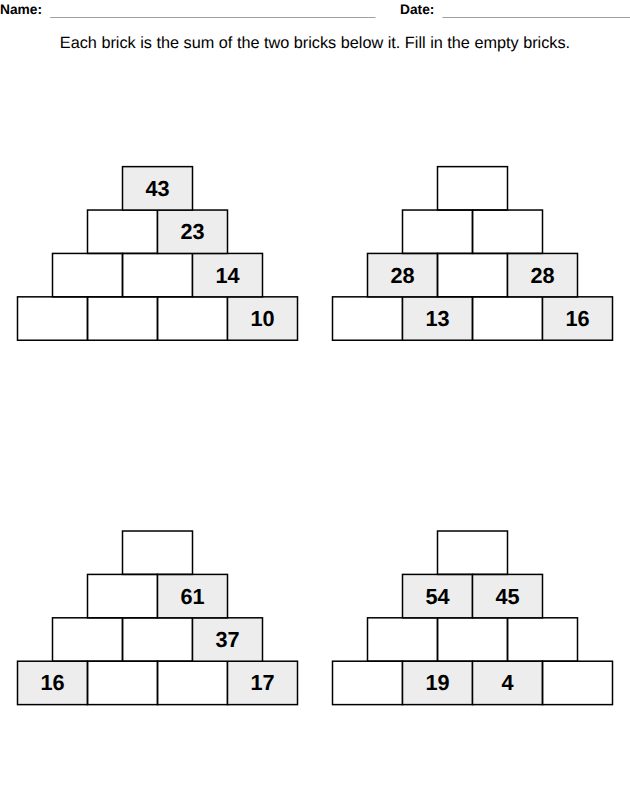
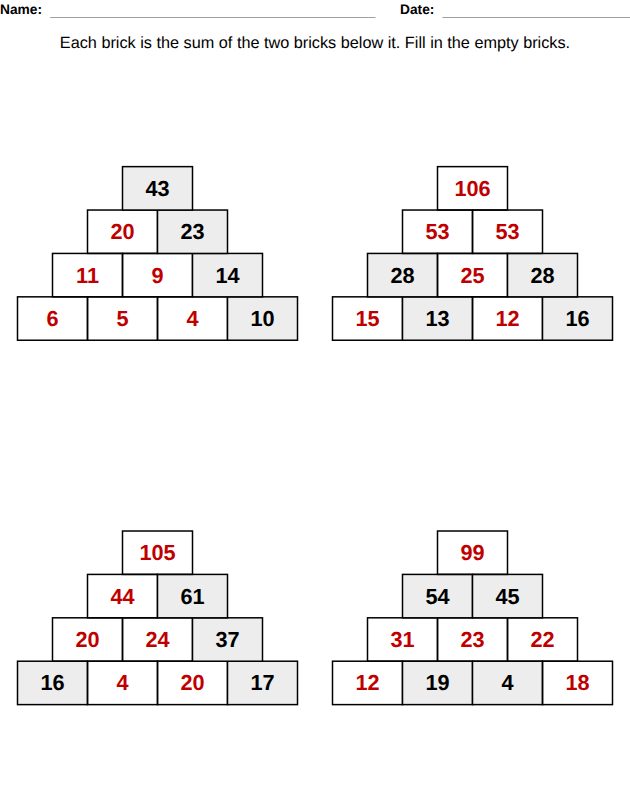
Each brick is the sum of the two bricks below it. Young children add from the bottom row up. From ages 8-9, some bricks of the bottom row are hidden and some bricks at the top are given, so the child must add and subtract. Every pyramid can be solved from the bricks shown.

One worksheet, many levels: addition from 4 to 11

The same worksheet changes with the level you choose. Here is the addition page at four ages: dots to count, sums to 20 with missing numbers, column addition, then 4-digit numbers and three numbers to add.

Addition worksheet, Ages 4-5
Ages 4-5
Addition worksheet, Ages 6-7
Ages 6-7
Addition worksheet, Ages 8-9
Ages 8-9
Addition worksheet, Ages 10-11
Ages 10-11

A book with several levels has one section per level, in order. Choose one level for a book made for one class, or a range of levels for a book that grows with the child.

Math written the way children learn it in each country

The workbook is printed in English, French, Spanish, German or Italian, and the math follows the habits of each language: long division with a bracket in English, with the French-style frame in French, Spanish and Italian, and in a row in German. The multiplication sign is a dot in German, and the division sign is ÷ in English and a colon in the other languages.

Numbers are written as in each language too, for example 4,315 and 3.5 in English, 3,5 in French. When you choose the levels by school grade, the grades follow the country of the book language.

Long division, English
Long division, French

Answer key at the end of the book

Answer key: number pyramids

Every math worksheet has its answers in the answer key at the end of the book, with 2 or 4 answers per page. Each answer shows the page number of its worksheet, so a parent or a teacher can check a page quickly.

How to create this workbook

  1. Create a free account and open the Kids tab of your dashboard.
  2. Click the card of this workbook to see its worksheets and 3 example pages, then click Create this book.
  3. Choose the language, the title and the page size, then the levels by age or by school grade.
  4. Keep the worksheets you want and set the number of pages of each one per level.
  5. Choose the answer key and the margins, generate the book, then download a PDF or a PPTX file from the editor.

Every option is explained in the kids workbooks guide, and all the other workbooks are on the kids workbook generator page.

Frequently asked questions

Which ages does the math workbook cover?

Ages 4 to 11, in 7 levels from Ages 4-5 to Ages 10-11 (or Pre-K to Grade 5 for a book in English). Each worksheet only appears at the levels where it exists: for example multiplication from ages 7-8 and Roman numerals from ages 8-9.

Can I make a book with only multiplication or only addition?

Yes. All the worksheets are selected at the start: untick the ones you do not want, and set the number of pages of each worksheet per level, from 0 to 60.

Are the calculations different on every page?

Yes. The numbers are drawn again for every page and every book, so two pages of the same worksheet, or two books made with the same settings, are different.

Does the workbook show how to carry and regroup?

Column additions have small boxes for the carried digits, and column subtractions ask the child to regroup when needed. Long multiplication shows the partial products, and long division asks for the quotient and the remainder.

Is there an answer key?

Yes, you can add an answer key at the end of the book, with 2 or 4 answers per page. Each answer shows the page number of its worksheet.

Can I sell the math workbooks I create?

With a PRO or EXPERT plan, which include commercial rights, you can publish and sell your books, for example on Amazon KDP. Books made on the FREE plan are for personal use. The page limit per book is 50 on FREE, 100 on PRO and 200 on EXPERT.

Create your kids math workbook

Create a free account to try it, or choose a plan for longer books and commercial rights.

Related: All kids workbooks / Kids workbooks guide / Kids activity book generator / Kids Sudoku book generator / Plans and pricing

Last updated: October 28, 2026